
One Dad, Three Dogs, and a Robot Vacuum: The Ultimate Hack for Pet Hair
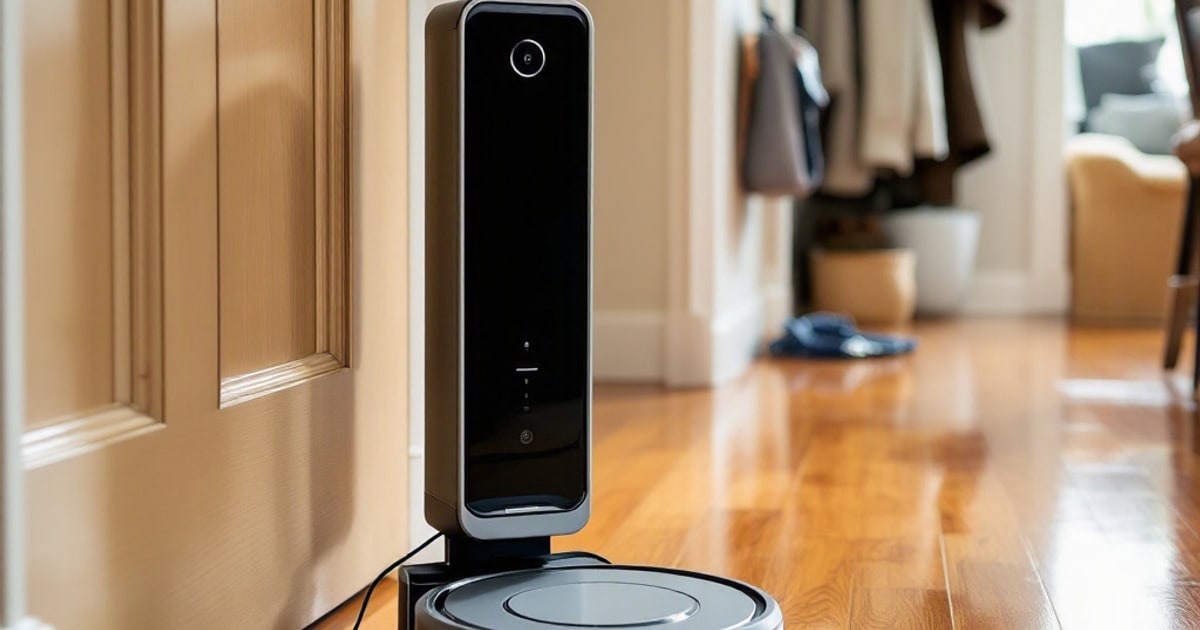
My house looks like a pet-hair stress test by about 7:15 every morning.
We live in the Seattle area with three dogs: Maple the golden retriever, Boone the black lab, and Tilly the terrier mix who somehow sheds above her weight class. On a good day, the floors collect a light layer of fuzz. On a normal day, the hallway looks like someone quietly opened a down pillow and walked away. Add rain, muddy paws, kids, backpacks, and the usual Pacific Northwest rotation of wet jackets by the door, and “just sweep later” stops being a plan.
For years I treated pet hair like a motivation problem. I thought I needed to be more disciplined about sweeping, more consistent with the upright vacuum, or more willing to spend part of Saturday chasing fur out from under the dining bench. What I actually needed was a system that handled the same boring mess every single day without depending on my energy level.
That is where a good robot vacuum changed the game. Not a cheap random one that bounces around like a confused hockey puck, and not a gimmicky one that looks smart until it eats a charging cable and gives up. I mean a real, mapped, pet-hair-capable robot vacuum with enough suction, enough navigation, and ideally a self-empty dock.
If you are a dog dad trying to decide whether one is worth it, here is the short answer: yes, if you buy for pet hair instead of buying for price alone. Here is the longer answer from one Seattle dad who got tired of living in a permanent layer of retriever fluff.
Why pet hair gets out of hand so fast
The hardest part about pet hair is not the deep clean. It is the daily accumulation.
That is especially true in a Pacific Northwest house. Dogs come in damp. Dirt sticks to paws. Hair clings to baseboards, stair edges, rug borders, and every place the morning light hits with cruel honesty. If you have hardwood or laminate, the hair shows up immediately. If you have rugs, it settles in and waits until you look closely enough to regret it.
I used to think I had a once-a-week problem. I did not. I had a twelve-hours-between-cleanings problem. That is a very different assignment. A normal vacuum can absolutely fix the floor, but only if a human keeps deciding to do it. A robot vacuum works because it gets rid of the layer before the layer becomes a weekend project.
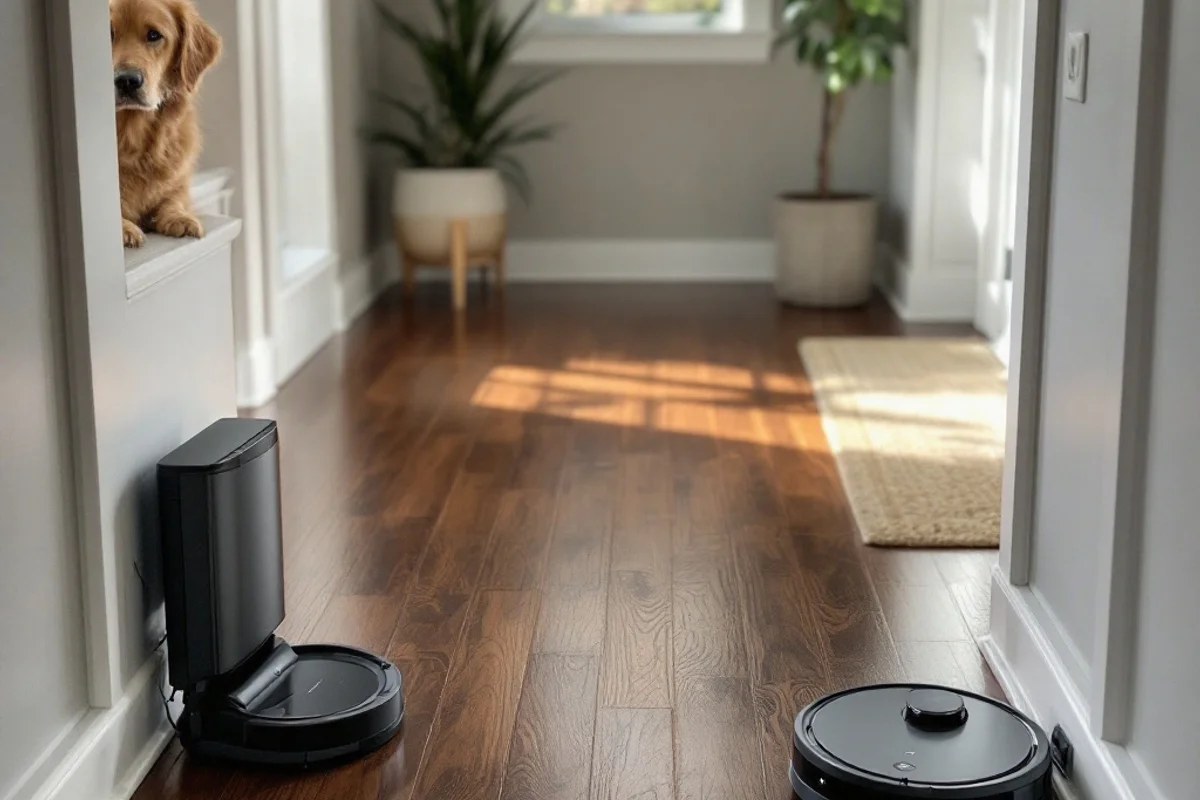
What did not work in our house
Before I bought a robot vacuum that could actually handle dogs, I tried the usual budget moves.
Broom only: Good for cracker crumbs. Bad for pet hair. Fur sticks to the broom, drifts into corners, and somehow ends up under the exact cabinet line your brain can no longer unsee.
Cordless vacuum as the whole strategy: I still like a good handheld or stick vacuum for stairs, dog beds, the couch, and the car. But as the only pet-hair plan, it still depends on me remembering, caring, and having five spare minutes at the exact right time.
Cheap robot vacuum: This was my favorite mistake because it taught me what matters. The bargain model I tried first clogged fast, got lost constantly, wrapped itself in dog hair, and cleaned in random loops that missed half the room. The app was barely useful. There was no meaningful room control. It turned a simple goal—keep the floor decent—into one more gadget I had to manage.
Weekend cleanup only: This is the lie pet owners tell themselves when they are tired. By Saturday, the hair is under furniture, around chair legs, stuck to entry rugs, and braided into dust along the baseboards. You are not maintaining anymore. You are recovering.
The lesson was simple: with heavy shedders, “good enough” features are usually not good enough. If the robot gets tangled, lost, or too annoying to empty, you stop using it. Then the hair wins again.
What finally worked
The setup that finally made sense for us was a mapped robot vacuum with a self-empty dock and enough real suction to handle dog fur every day. The model that best represents that sweet spot for me is the Roborock Q5 Max+.
What changed was not that one run made the house perfect. It was that the vacuum now runs on schedule, in the right rooms, before the mess gets a head start. I mapped the main floor once, scheduled the kitchen, hallway, living room, and entry to run in the morning, and suddenly the floor stopped feeling like a constant low-grade failure.
The self-empty dock matters more than the marketing copy makes it sound. Dog hair fills a robot bin fast. When you have multiple dogs, a dock is the difference between “helpful system” and “small robot that now needs me every day too.”
Room mapping matters too. I can run just the entry after a wet walk, do an extra pass around the dog beds, or skip the room where somebody left Lego landmines on the rug. That is when a robot vacuum stops feeling like a toy and starts feeling like household infrastructure.
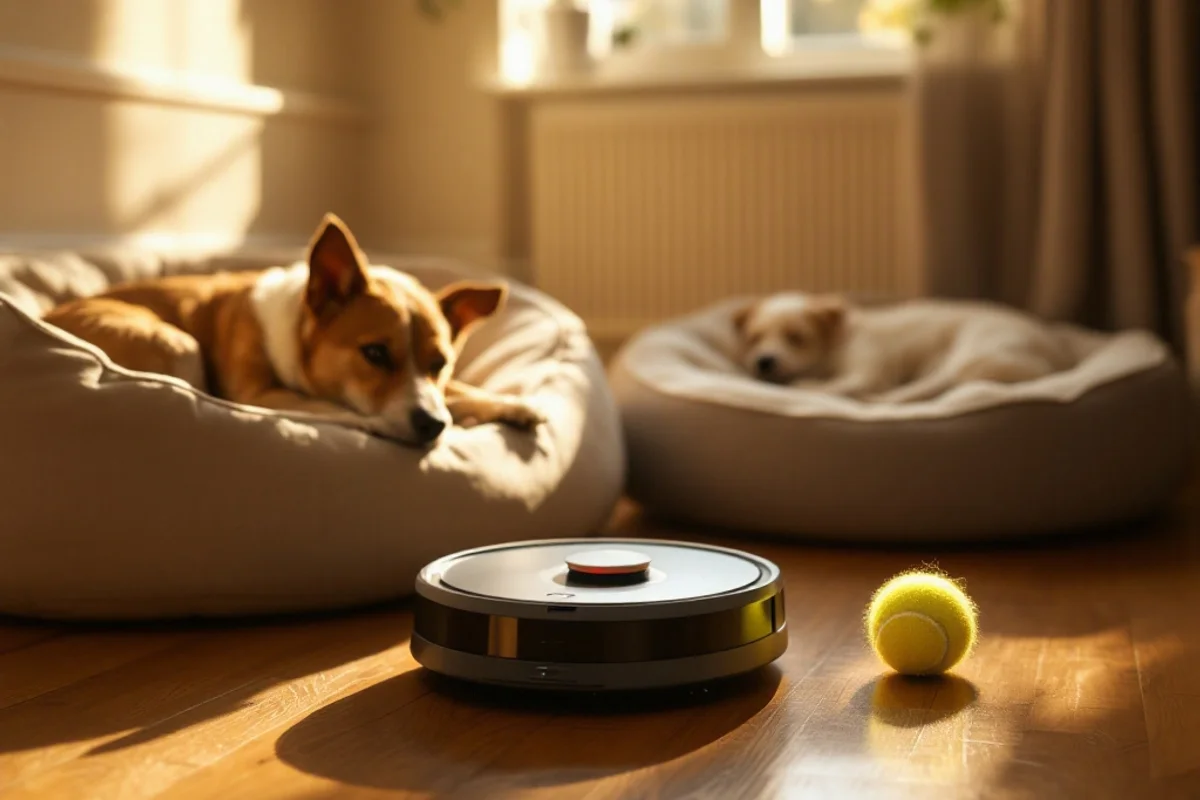
The models I would actually recommend for pet hair
I have no interest in pretending every robot vacuum is equally good. They are not. If I were shopping today for a house with multiple dogs, these are the ones I would actually shortlist.
Best overall for most dog families: Roborock Q5 Max+
If your main goal is daily fur control on hard floors and rugs, this is the lane I like best. The Q5 line is strong on vacuum-first performance, dependable room mapping, and low-drama scheduling. It is the kind of robot you buy when you want fewer chores, not a new hobby.
Why it works for pet hair: strong pickup, smart room control, and the dock that keeps you from emptying fur every single run. If you do not need mopping to be the headline feature, this is where I would start.
Best premium vac-mop combo: Roborock S8+
The S8+ makes sense if your floor battle is not just fur but also damp paw prints, kitchen grit, and that light muddy film that appears after a rainy week. The vacuum side is excellent, and the mop combo is genuinely useful for maintenance on hardwood-heavy homes.
I would not buy it just because “mop” sounds fancy. I would buy it if your dogs come in wet half the year and you want the daily cleanup to do more than pick up fur.
Best if your floors are never truly clear: iRobot Roomba j7+
The j7+ is the family-chaos pick. If your floor is regularly covered with dog toys, charging cords, socks, and random kid debris, better obstacle avoidance matters. Roomba also does well with pet hair because the dual rubber brush design is much less annoying than the old bristle-and-tangle experience.
This is the one I would steer toward for households where pre-cleaning the floor before the robot runs is simply not going to happen consistently.
Best mid-tier value: Shark AV2501AE Matrix
Shark is often the practical middle lane: self-emptying convenience, solid cleaning, and a price that usually lands below the premium flagships. That is why I like the AV2501AE Matrix for dads who want a meaningful upgrade from budget robots without jumping all the way to top-shelf pricing.
It is not the fanciest option here. It is the “I want this to work, and I want to feel good about the receipt” option.
Best budget compromise: Eufy 11S Max
I only recommend the Eufy 11S Max if you understand the tradeoffs. It can absolutely help with fur in a smaller house or apartment. It is simple, affordable, and still a lot better than broom life. But it is not a mapped, self-emptying, pet-hair command center.
If your layout is simple and your expectations are realistic, it is a respectable budget pick. If you have three dogs and a bigger main floor, I would save longer and buy the smarter class of machine.
The backup tools that still earn a place
A robot vacuum handles frequency. It does not replace every other tool. For stairs, upholstery, dog beds, and the car, I would still keep a Tineco Pure One S15 Pet nearby. For furniture corners and cushion seams, a Bissell Pet Hair Eraser Hand Vacuum is one of those boringly useful tools that ends up living in the charging spot full-time.
And because no pet family ever really escapes soft-surface hair, I would keep a ChomChom Roller pet hair remover or a lint roller multi pack around for chairs, hoodies, and the back seat before you have to take people somewhere.
What to look for before you buy
If you are buying specifically for pet hair, here is the checklist I would use.
A brush system that does not become a fur sculpture
This is the big one. Look for rubber rollers, anti-tangle language, or designs built for pet hair instead of generic “all floor” promises.
Actual mapping and room control
If you cannot tell it to clean just the entry, just the kitchen, or do an extra pass where the dogs sleep, you will feel the limits quickly.
A self-empty dock if you have multiple shedders
With three dogs, I consider this close to essential. Pet hair fills bins fast, and convenience is what keeps the robot running every day.
Mop combo only if your floors justify it
Mostly carpet? Skip the premium mop tax. Hardwood, laminate, wet paws, and muddy entry traffic? Then the mop feature becomes much easier to defend.
Easy replacement parts
You will eventually need filters, side brushes, or a new main brush. That is just life with heavy pet use. Keeping something like Roborock replacement filters and side brushes ready is cheaper than pretending maintenance will never arrive.
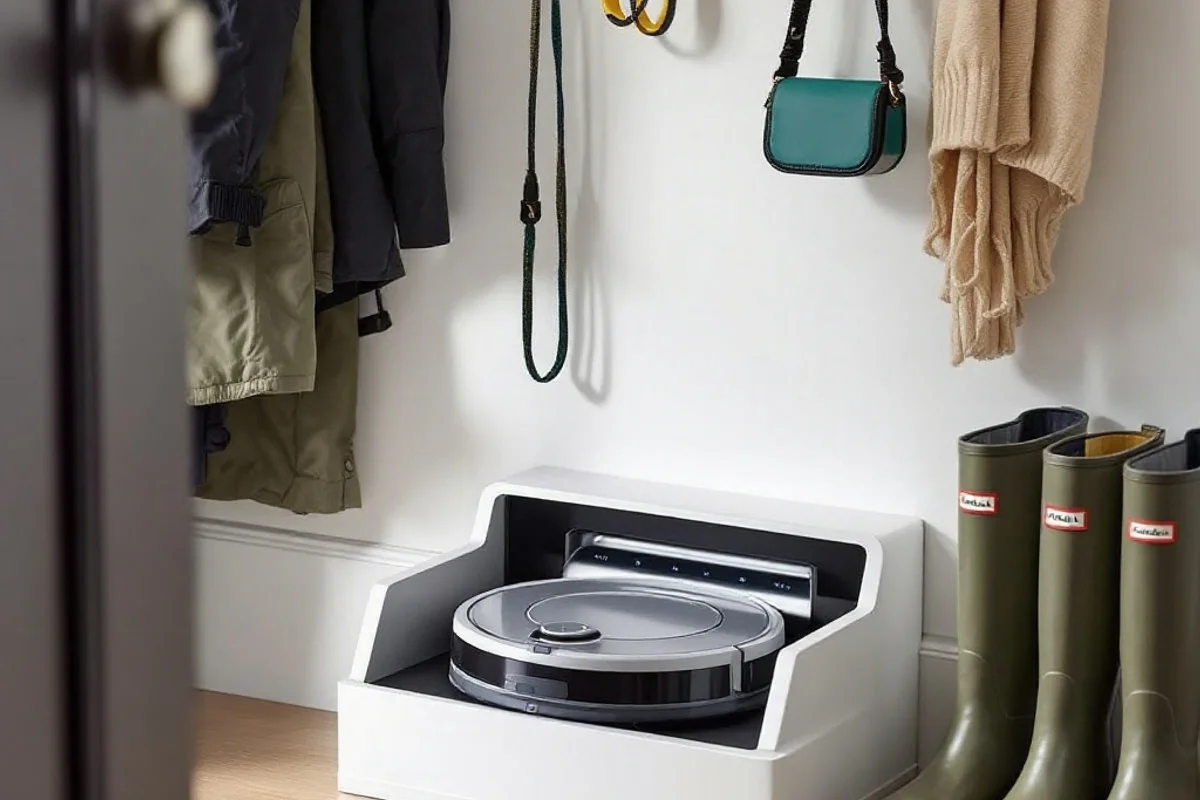
The maintenance routine that keeps it working
The biggest myth about robot vacuums is that they are fully hands-off. They are not. They are just a much better trade than sweeping the same dog hair yourself every day.
My maintenance routine is simple:
- Every few days: check the dock or bag status and make sure the robot is not packed beyond reason with dog fur.
- Once a week: inspect the main brush, clear any wrapped hair, and clean or tap out the filter according to the manual.
- Every week or two: wipe the sensors, clean the side brush, and check the wheels. Dog hair likes to hide in places that make performance slowly worse.
- Every couple of months: replace filters or worn brushes if pickup starts dropping.
That sounds like more work written down than it feels in real life. In practice it is a five-minute reset that keeps the machine doing the job you bought it for. Ignore maintenance long enough and even a good robot starts acting dumb.
I also do a tiny pre-flight pickup before the scheduled run: move a stray charging cable, slide the dog water bowl if needed, and make sure a chew toy is not about to become an obstacle course. That thirty-second habit saves a lot of rescue missions later.
Final verdict from a tired pet dad
If you have one light-shedding pet, a robot vacuum is a convenience. If you have three dogs, it starts to feel like infrastructure.
That is the real value in our house. The floors are not magically perfect. We still have muddy paws, couch hair, and the occasional “why is there kibble in this room?” mystery. But the daily layer of fur no longer gets to build momentum. The robot handles the repeatable mess before it becomes a weekend chore, which means the house feels calmer with almost no extra effort from me.
If I were giving the short recommendation, it would be this: buy the best mapped, pet-hair-capable robot you can justify, and if your dogs shed heavily, get the self-empty dock. For most families, the Roborock Q5 Max+ is the sweet spot. If muddy paw prints are part of the problem too, look hard at the Roborock S8+. If clutter is what constantly trips up your cleaning plans, the iRobot Roomba j7+ is easier to trust.
The main thing is not repeating my first mistake and buying the cheapest little disc on the internet, then deciding the whole category is overhyped. Robot vacuums absolutely work for pet hair. You just need one that is built for fur, real rooms, and a family that does not live like a showroom.
This post was AI-assisted and reviewed by Dad.

Written by Nick Reef
Nick is the Pacific Northwest dad behind OpsHQ Go — software engineer by day, parent of three by night. Everything here is tested first-hand by our family of five (plus three labs and an orange cat): recipes cooked in our kitchen, trails hiked on real weekends, games played at our table.
More about Nick & the family →Found this helpful? Share it!
Get More Shortcuts
Weekly tips, hacks, and adventures delivered to your inbox.