
10 Party Games for Large Groups (8+ Players)
The bigger the group, the harder it is to find a game that works. Half the games max out at 6 players, and splitting into two groups kills the energy. These games are designed for big crowds.
1. Wavelength
Players: 2-12+ | Time: 30-45 min
A dial with a spectrum (Hot to Cold, Underrated to Overrated). One player gives a clue, everyone debates where it lands. Generates the best arguments you’ve ever had at a party.
2. Just One
Players: 3-7+ (scales higher with house rules) | Time: 20 min
Everyone writes a one-word clue for the guesser — but duplicate clues are eliminated. When three people write the same obvious clue and it gets deleted, it’s pure comedy.
3. Telestrations
Players: 4-12 (Party Pack goes to 12) | Time: 30 min
Telephone meets Pictionary. Draw a word, pass it. Next person guesses your drawing, passes it. By the end, “birthday cake” has become “volcanic eruption.” Get the 12-Player Party Pack. Honestly, the worse you are at drawing, the funnier this game gets — our best rounds have come from people who can barely draw a stick figure.
4. Codenames
Players: 4-8+ (split into teams) | Time: 15-30 min
Two teams, two spymasters giving one-word clues. The tension when your team is deciding between two words is electric. Scales infinitely with bigger teams.
5. Decrypto
Players: 3-8 | Time: 30 min
Like Codenames’ cooler cousin. Give coded clues to your team while the other team tries to intercept. Gets better with every round as patterns emerge.
6. Wits & Wagers
Players: 3-20+ | Time: 25 min
Trivia where you don’t need to know the answer — just bet on who’s closest. Everyone writes a number, then you gamble. The person who knows nothing about geography can still win by betting smart.
7. One Night Ultimate Werewolf
Players: 3-10 | Time: 10 min per round
Social deduction in 10 minutes. Everyone closes their eyes, werewolves wake up, chaos follows. Accusations, lies, and dramatic reveals. Play 5 rounds in an hour.
8. The Resistance: Avalon
Players: 5-10 | Time: 30 min
King Arthur themed social deduction. Good guys vs hidden traitors. The table erupts when someone is caught lying. Friendships are tested.
9. Cards Against Humanity
Players: 4-20+ | Time: 30-90 min
You know this one. Fill in the blank with the most inappropriate answer. Not for every group, but when the vibe is right, nothing beats it.
10. Two Rooms and a Boom
Players: 6-30 | Time: 15-25 min
The ultimate big group game. Two rooms, secret roles, negotiations, hostage exchanges. Works with 30 people. Sounds complicated — it’s actually super simple once you start. We played this at a neighborhood block party and people who hadn’t spoken to each other in months were suddenly scheming together.
Party Game Starter Kit
For your next big gathering:
- Telestrations Party Pack — the guaranteed crowd-pleaser
- Wits & Wagers — for the trivia crowd
- A Bluetooth speaker for background music
- LED party lights for the vibe
What’s your go-to party game? Tell us in the comments!
How to Actually Run a Game Night
Owning great games is only half the battle. The difference between a legendary game night and a forgettable one comes down to logistics. Here’s what I’ve learned from hosting way too many of these.
Snacks First, Games Second
Set up a snack station before anyone arrives. Finger food only — nothing that requires a plate and fork. Chips and dip, a charcuterie board, pretzels, mini sandwiches. Put drinks in a cooler or on a side table so people aren’t constantly getting up. The goal is zero interruptions once games start rolling.
Game Order Matters
Start with something dead simple — Wavelength or Just One. These are “warm-up” games that get people talking and laughing without anyone needing to read a rulebook. Save the heavier stuff like Avalon or Decrypto for the middle of the night when everyone’s comfortable and a little competitive. End with something chaotic and low-stakes like Telestrations so people leave on a high note.
Managing Energy Levels
Not everyone shows up at the same energy. Some people are game-night veterans, and some are sitting on the couch looking overwhelmed. Pair newbies with experienced players on teams. For team games, shuffle teams every round so nobody feels stuck. And always have a “bail-out” option — a chill corner where people can sit and chat if they need a break from the action.
The One Rule That Saves Everything
Explain the rules in under 2 minutes. If you can’t, the game is too complex for the group right now. Nobody wants a 10-minute rules lecture. Do a practice round instead — people learn by playing, not by listening.
Games to Avoid for Big Groups
Some games look like they’d work with 8+ players. They don’t. Save yourself the disappointment.
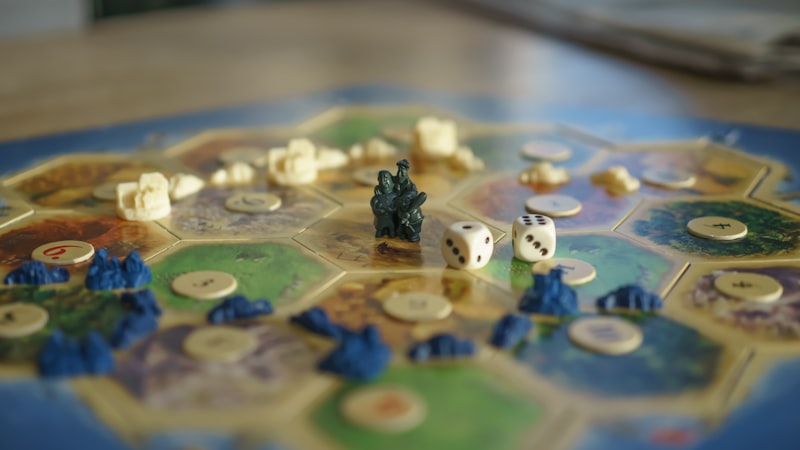
Settlers of Catan — Tops out at 6 with the expansion, and games drag at even 5-6 players. Downtime between turns is brutal when you’ve got 6 people staring at the board.
Monopoly — I know, grandma loves it. But with 8 people, you’re looking at a 4-hour slog where half the players are bankrupt and bored by hour two. Just don’t.
Risk — Another “classic” that implodes with big groups. Alliances form, someone gets eliminated early and sits there for 3 hours, and the game never actually ends. It just… collapses.
Secret Hitler — Hear me out. It’s a great game. But it maxes at 10 and the sweet spot is really 7-8. Beyond that, there are too many players who have almost zero information, and it turns into random guessing instead of clever deduction. Stick with Two Rooms and a Boom for that size.

Written by Nick Reef
Nick is the Pacific Northwest dad behind OpsHQ Go — software engineer by day, parent of three by night. Everything here is tested first-hand by our family of five (plus three labs and an orange cat): recipes cooked in our kitchen, trails hiked on real weekends, games played at our table.
More about Nick & the family →Found this helpful? Share it!
Get More Shortcuts
Weekly tips, hacks, and adventures delivered to your inbox.